Wu Chao
M.Eng candidate at Wuhan University, focused on AI applications of NLP and multimodal methods in vertical domains, including geospatial intelligence, remote sensing interpretation, and medical image interpretation.
M.Eng candidate at Wuhan University, focused on AI applications of NLP and multimodal methods in vertical domains, including geospatial intelligence, remote sensing interpretation, and medical image interpretation.
1. Optimized context management at the Agent Runtime layer to improve reasoning efficiency for long-horizon context tasks.
2. Explored engineering implementation of Claude Skills with a focus on progressive information disclosure and code execution isolation.
1. Led open-source refactoring of a satellite-imagery analytics product platform; built automated CI/CD release workflows with GitHub Actions and Docker.
2. Built a knowledge graph over internal documents and analytical products; referenced LangGraph to design a RAG system that improved official-site information retrieval.
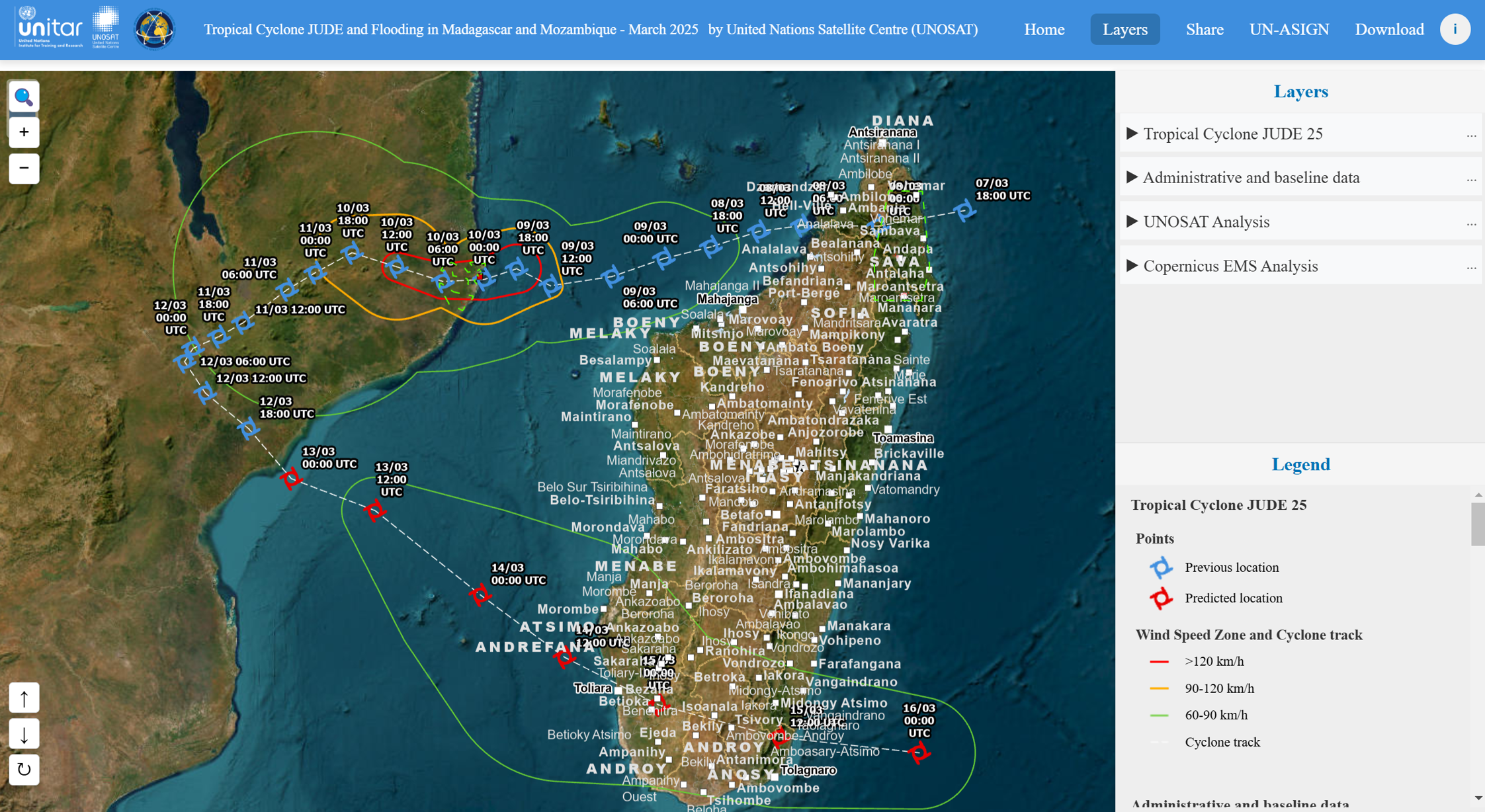
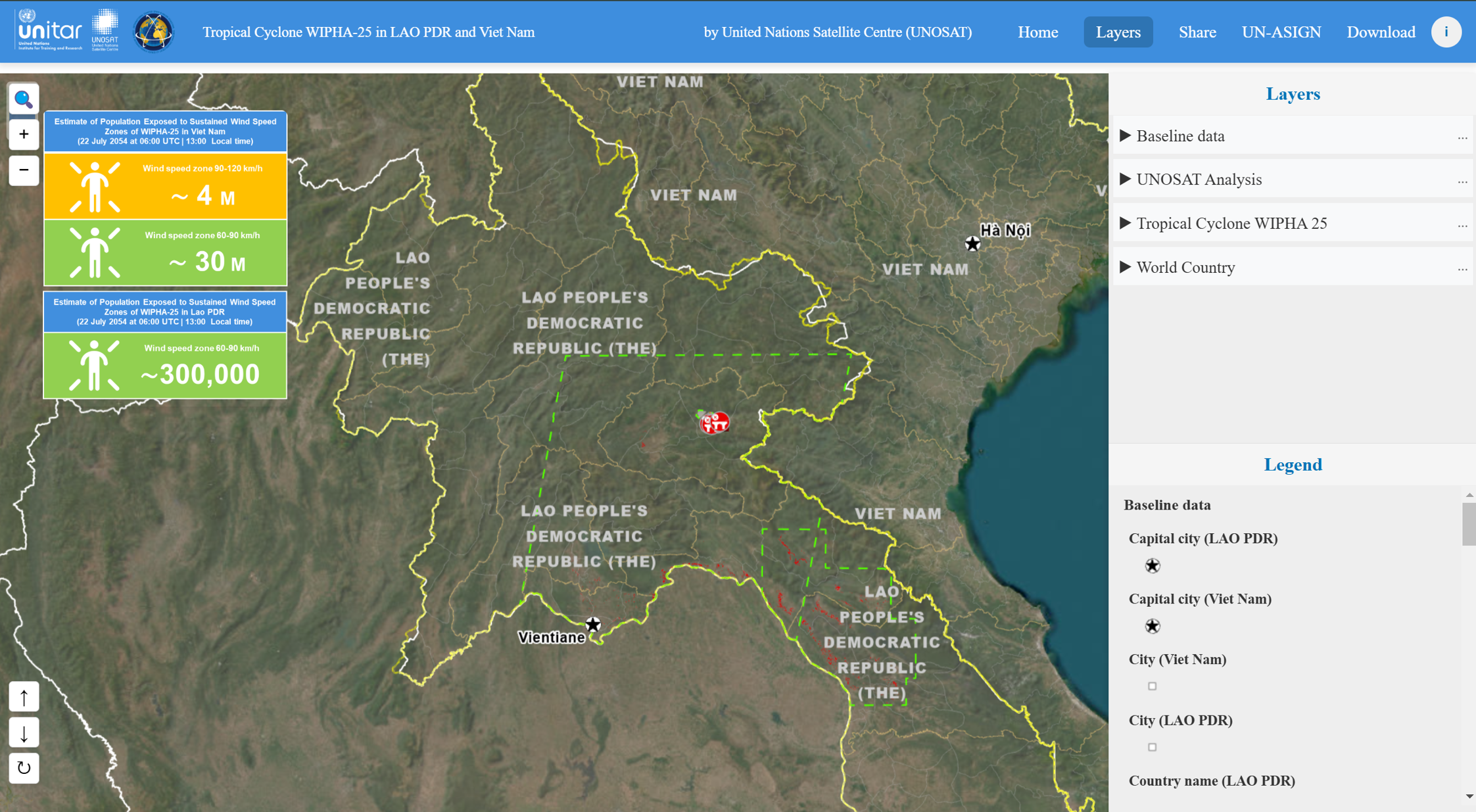
1. Neural framework migration: migrated generative, classification, and retrieval models from NVIDIA to Ascend GPUs with precision alignment.
2. Large-scale pretraining data processing: processed nearly 15 TB of text on Slurm clusters and implemented pointer-index-based on-demand loading.
3. Model deployment and service packaging: deployed multiple models on Ascend 910B and delivered train/infer containers for SaaS deployment.
1. Legal-domain LLM training: built fine-tuning datasets from legal exams, statutes, and case judgments, and fine-tuned open-source models for legal-domain adaptation.
2. Legal knowledge QA service: implemented a LangChain + Flask RAG service and exposed API endpoints for statute-oriented question answering.
3. Model deployment: participated in deployment of open-source generative and embedding models on Huawei Ascend 310-series accelerators.
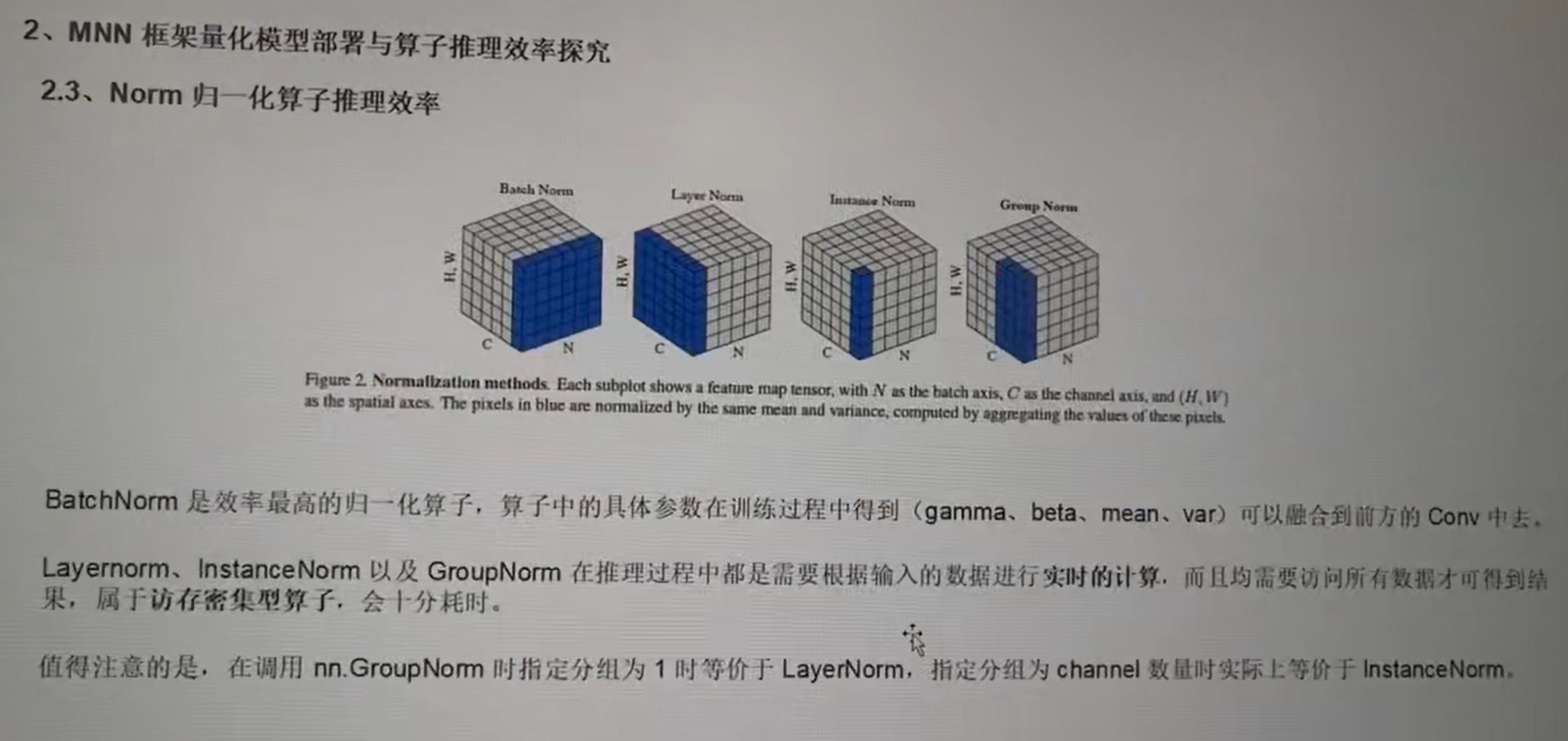
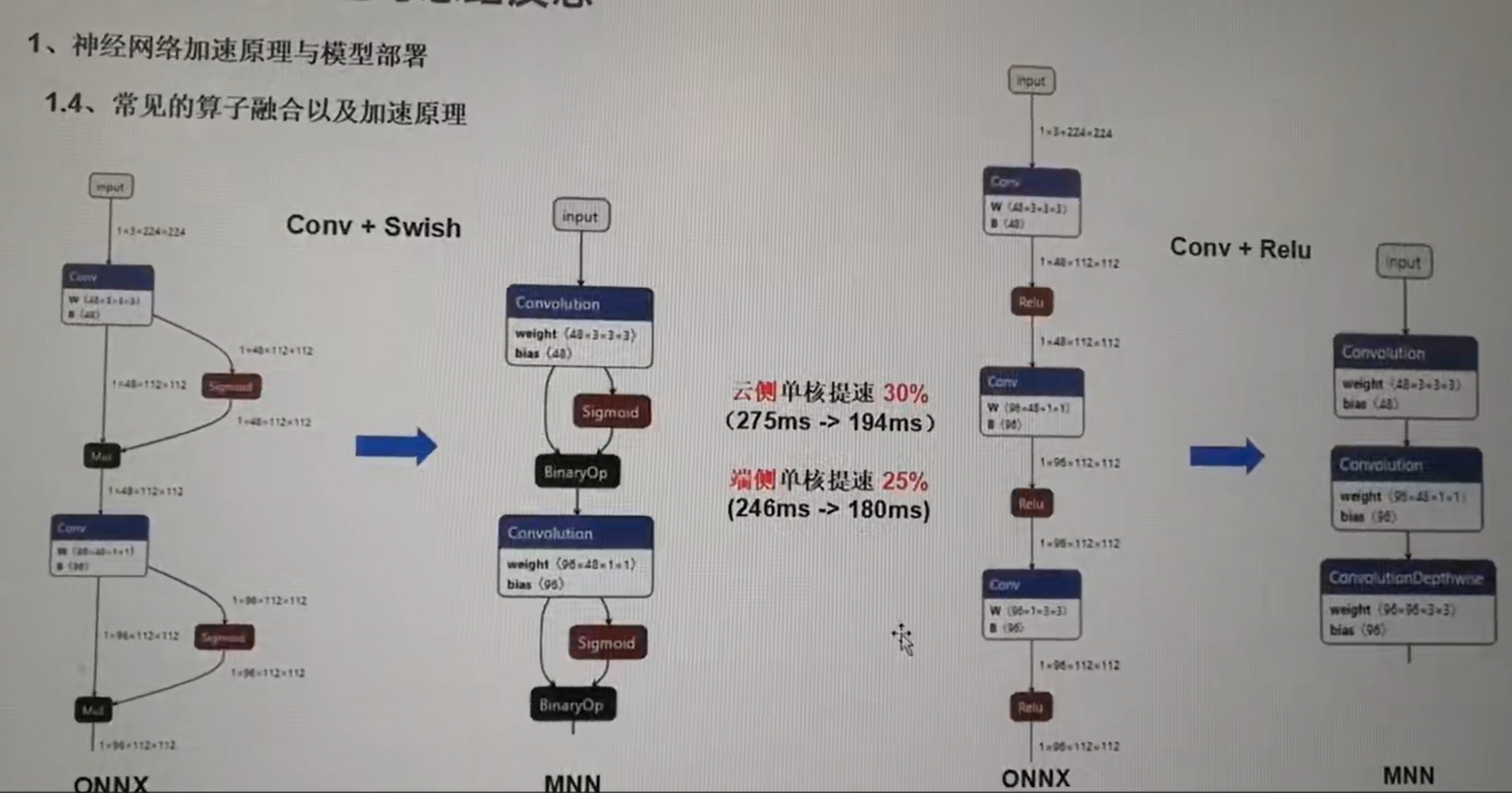
1. INT8 quantization for neural networks: completed operator fusion/replacement and improved inference speed by nearly 30% over the internal mobile baseline.
2. Evaluated PTQ and QAT strategies via torch.fx online simulation quantization to compare deployment effects.
3. On-device deployment of quantized models: deployed lightweight CLIP image-text retrieval on MNN and participated in PPQ quantization toolkit beta testing.
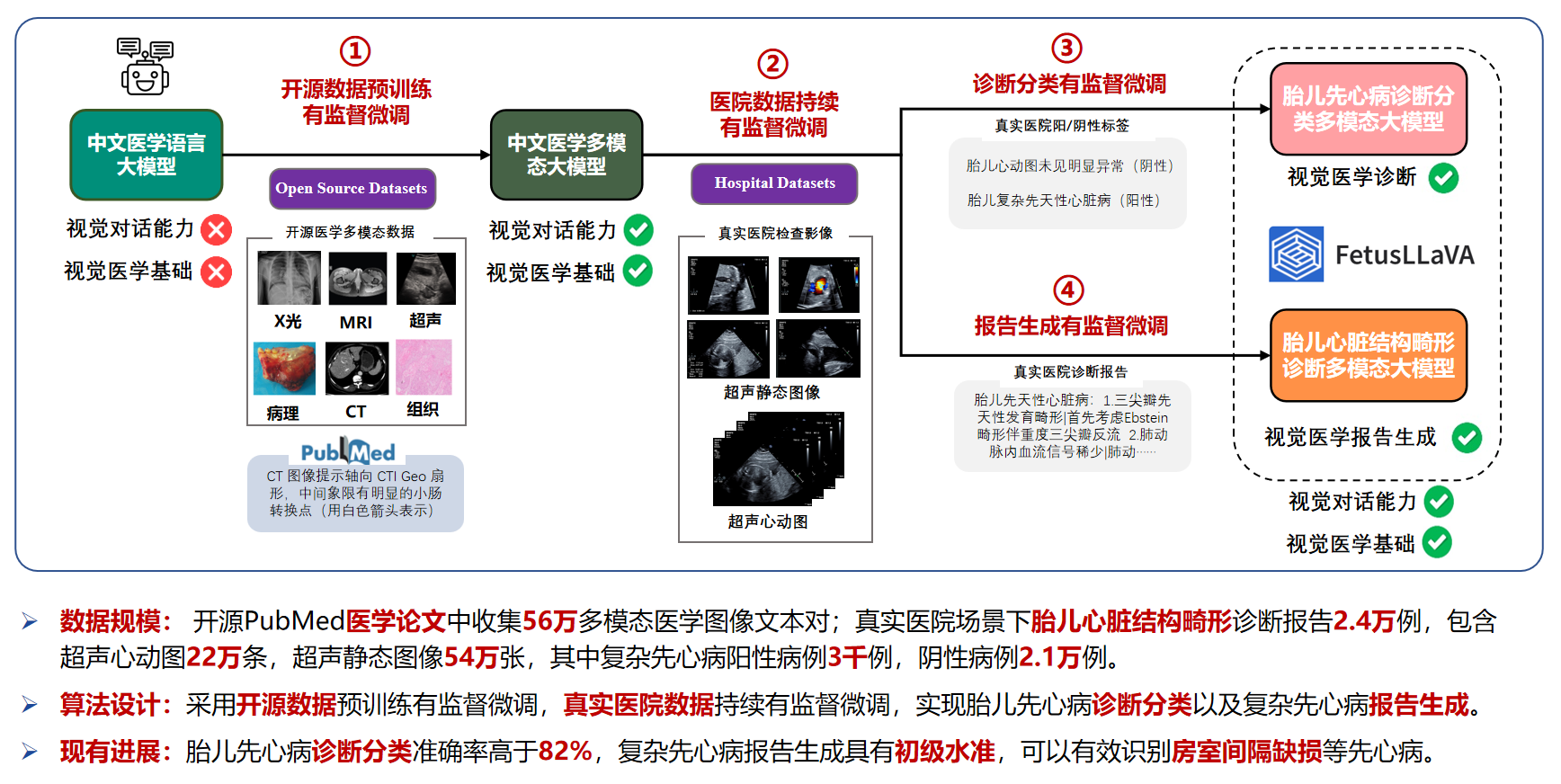
Intelligent Diagnosis of Congenital Malformations Using Multi-Center, Multi-Modal Pregnancy Screening Data
National Key R&D Program (“14th Five-Year Plan”) · Mar 2024 – Mar 2025
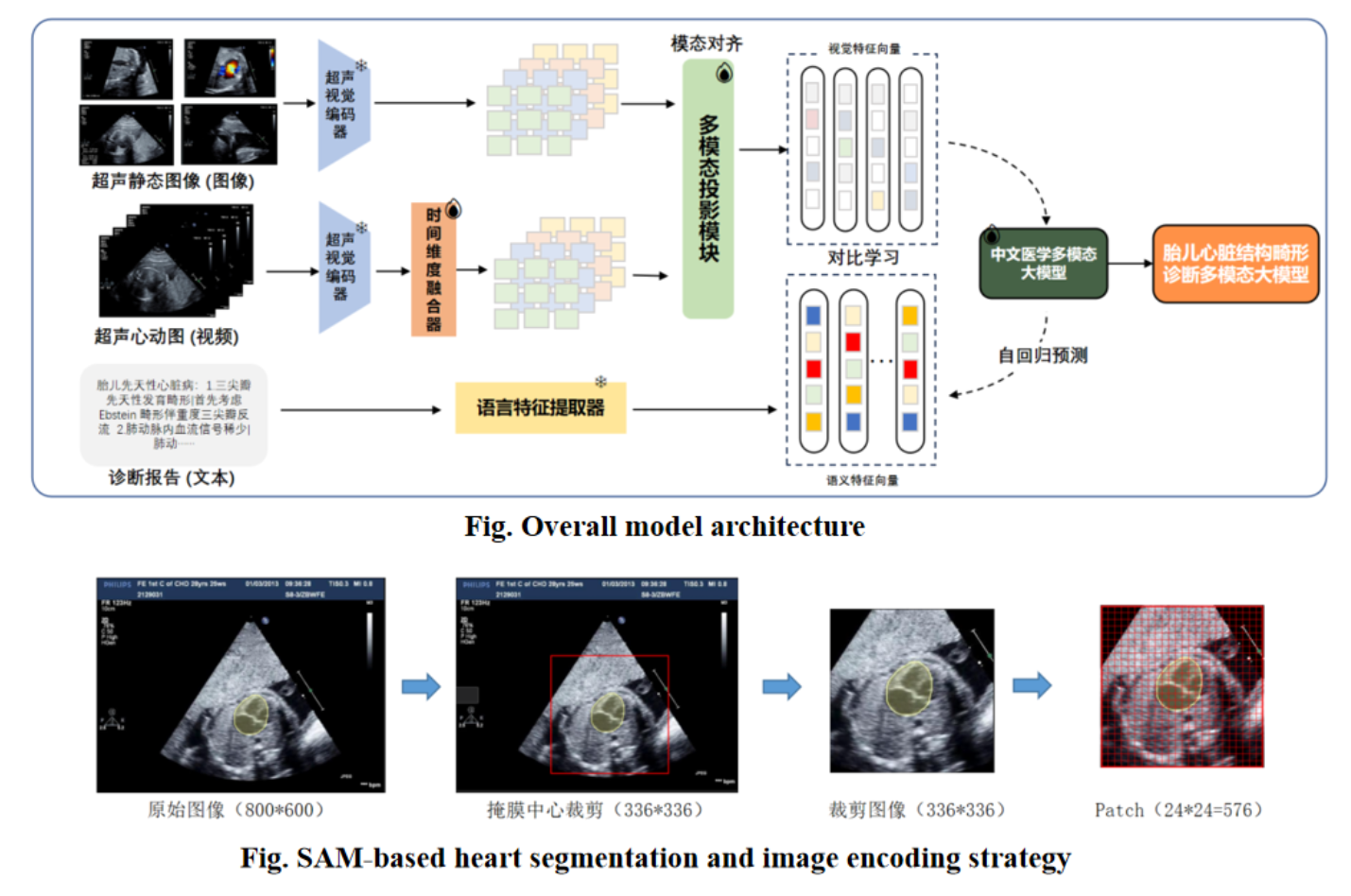
1. Trained a multimodal model for ultrasound-based fetal congenital heart disease diagnosis based on LLaVA; optimized multi-image/multi-video data structures to reduce visual token load and used reinforcement learning to improve fine-grained understanding.
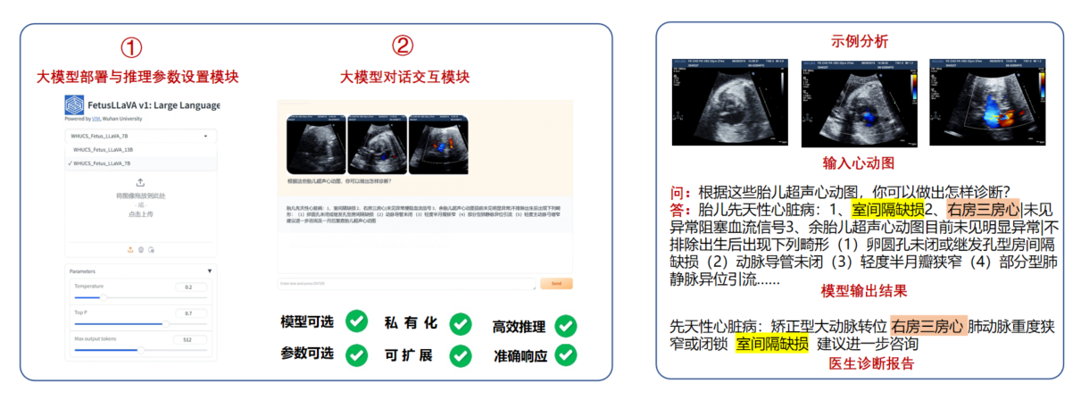
2. Built a two-stage "classification + generation" intelligent diagnosis system as one of the key annual outcomes of the project (
Official News
).
LLM-Driven Multimodal Bridge Knowledge Graph Construction (IGARSS 2025 Oral)
Master's Research Topic · Sep 2023 – Mar 2025
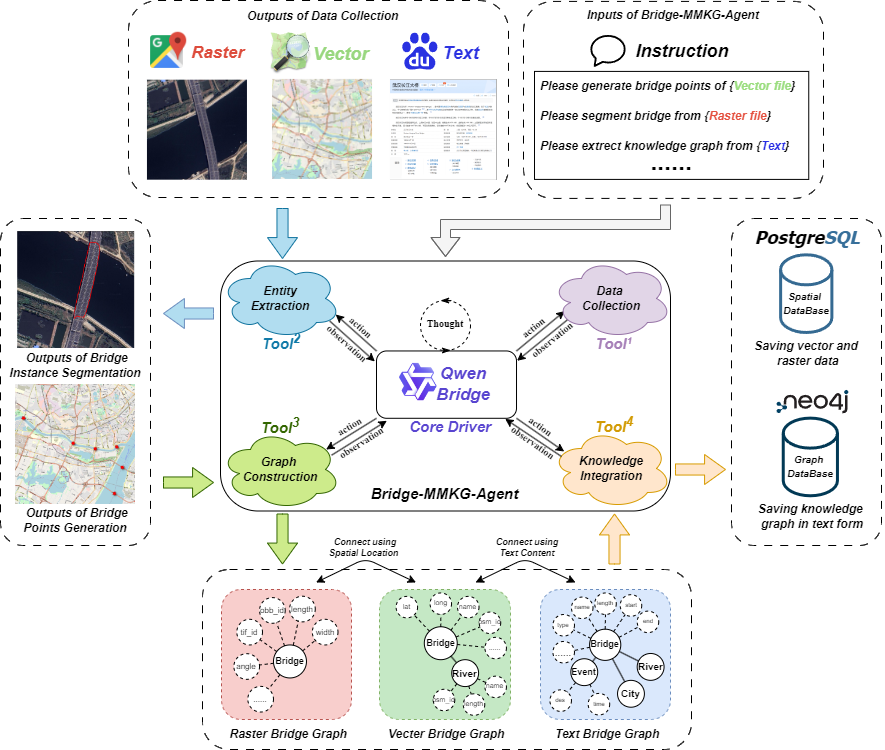
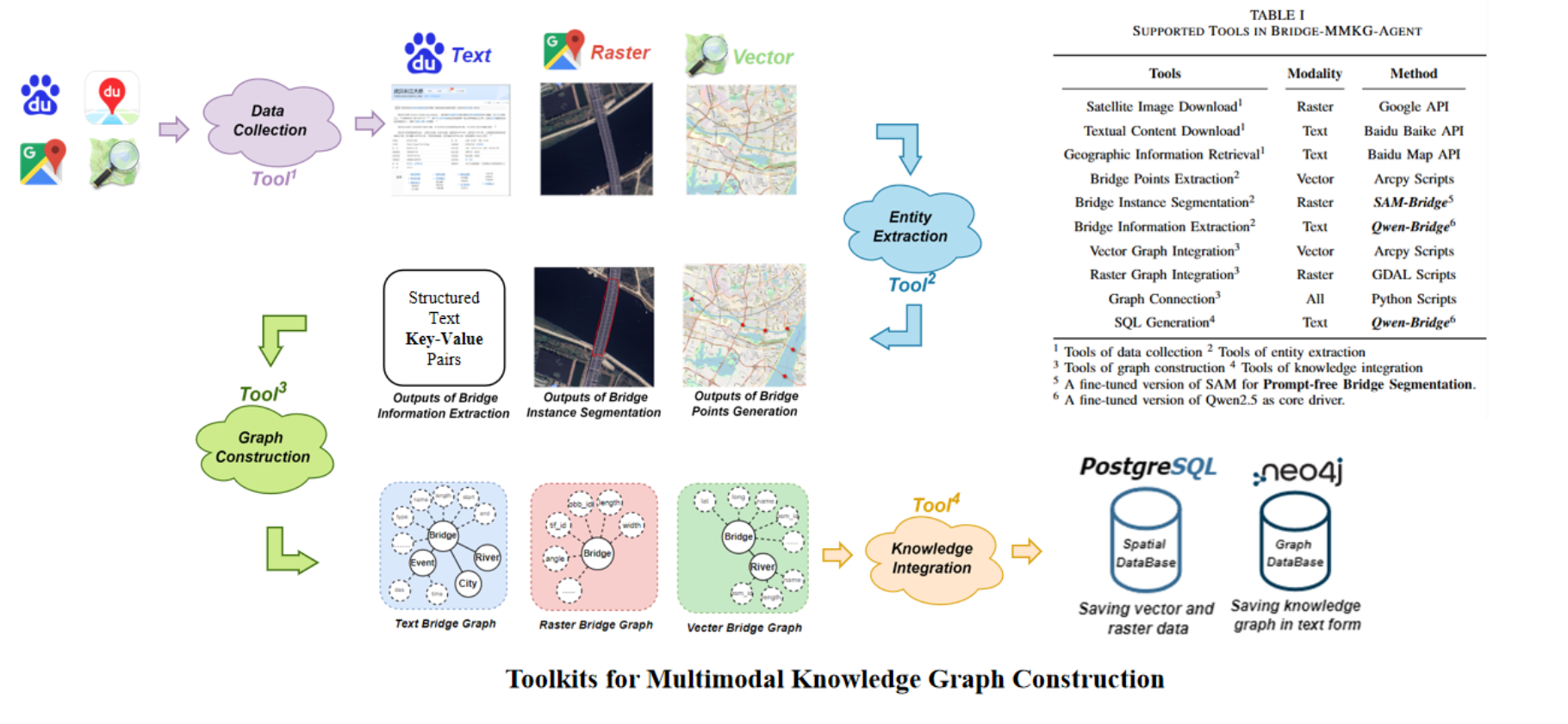
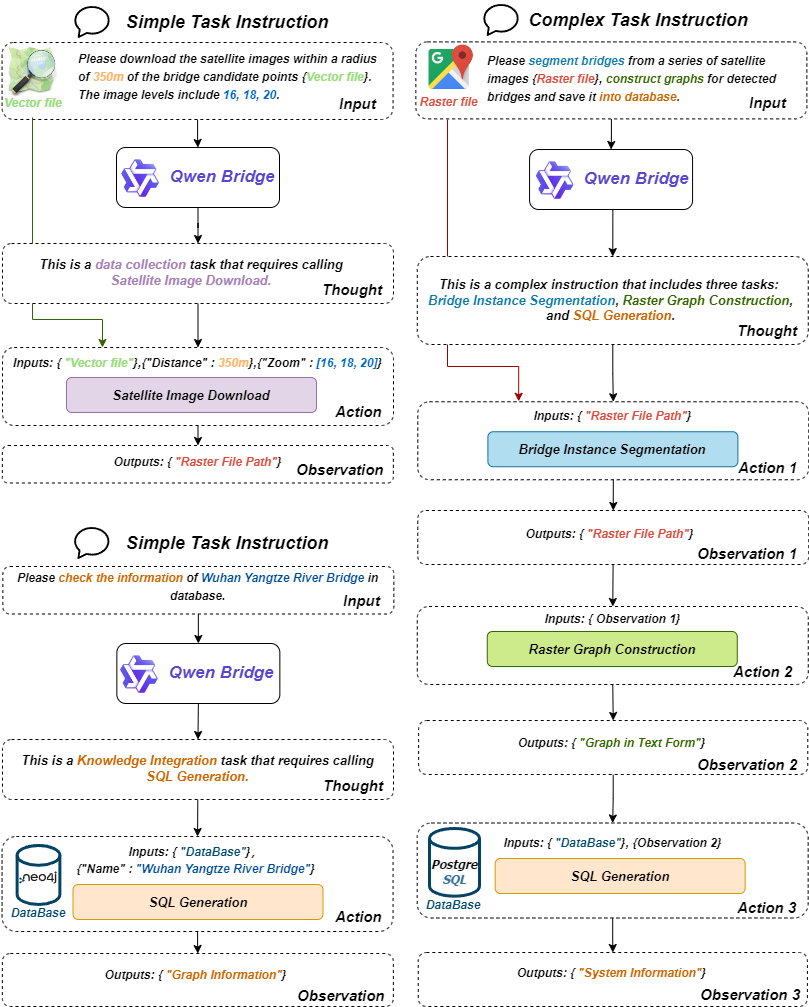
1. Trained a multimodal Bridge-KG agent using GPT-4o-generated QA data; instruction-tuned open-source models to improve task decomposition and structured outputs, then invoked tools to construct and fuse vector/raster/text modalities.
2. Trained SAM for remote-sensing bridge segmentation on open-source datasets to enable zero-prompt bridge extraction and improve large-scale multimodal KG construction efficiency.
Bridge Knowledge Graph Construction Based on Multimodal Data Mining
Undergraduate Graduation Project · Dec 2022 – Jun 2023
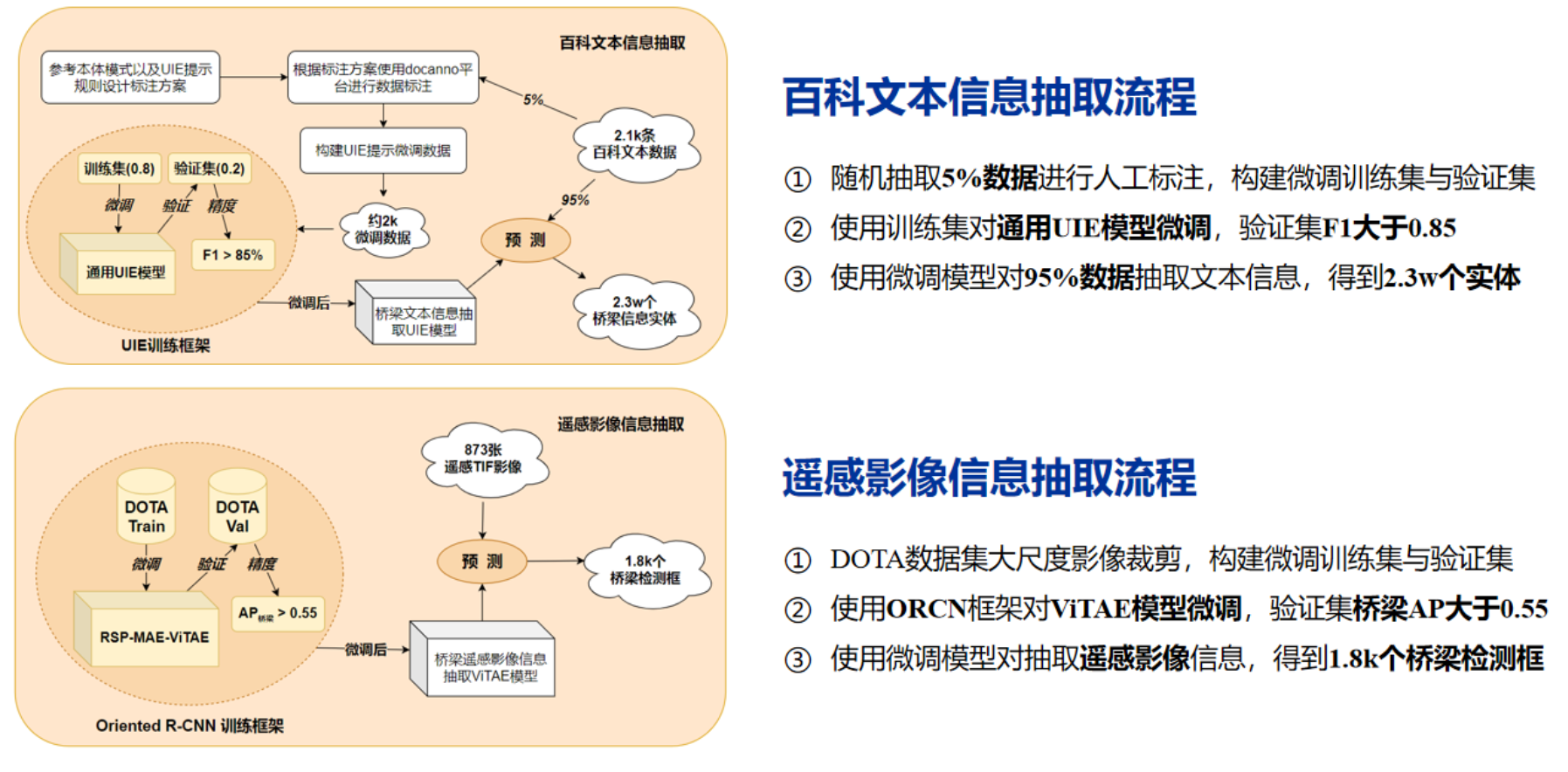
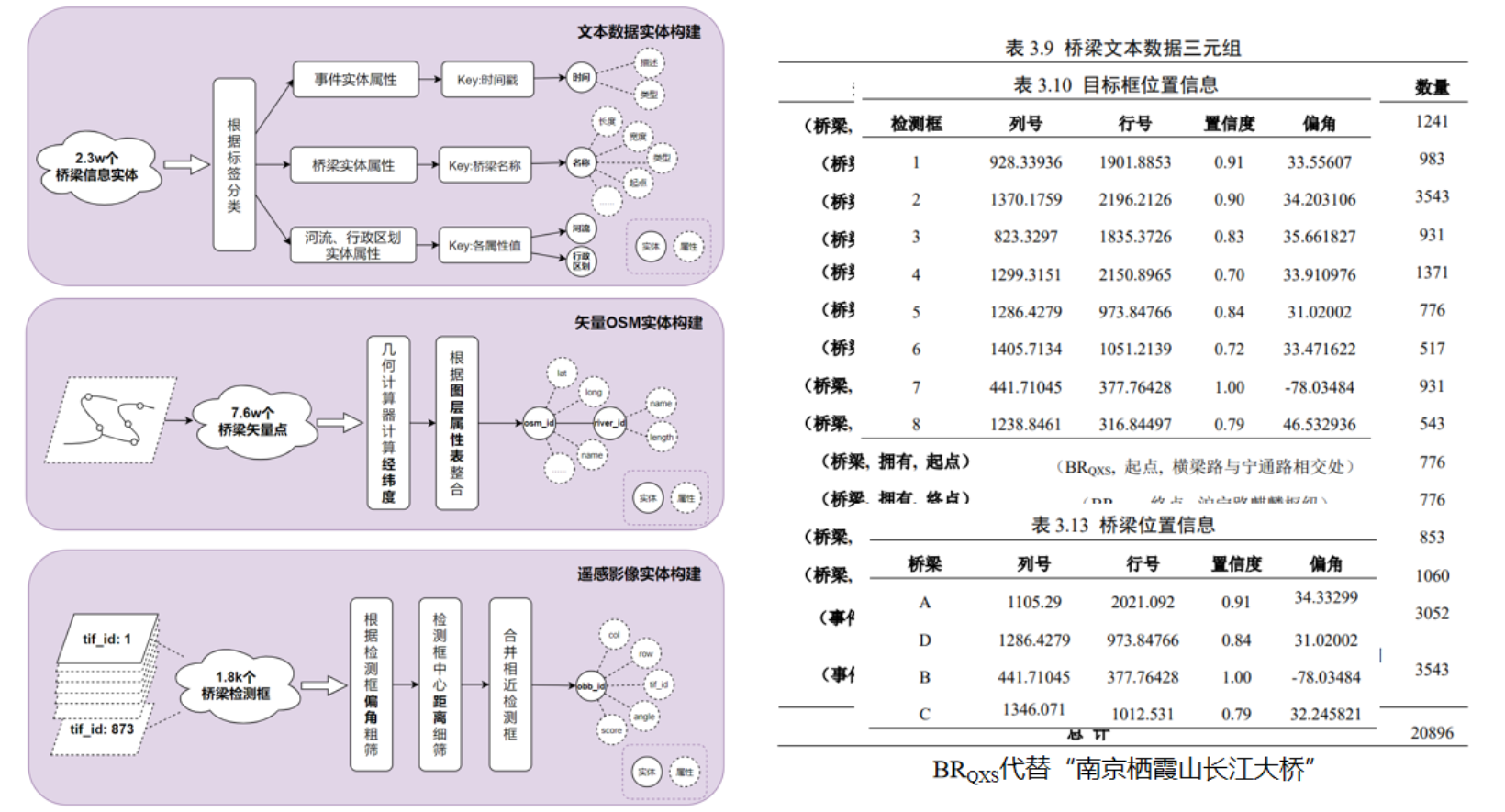
1. Performed bridge-domain text information extraction by fine-tuning the Baidu UIE model with 5% manually annotated data; achieved F1, Recall, and Precision scores above 0.85 on the validation set; extracted 23,000 bridge-related named entities from 2,119 encyclopedia articles.
2. Conducted bridge detection on remote sensing images by fine-tuning the ViTAE model using the DOTA dataset; obtained a validation mAP50 of 0.775 and a bridge-class AP50 of 0.557; detected 1,800 bridge bounding boxes across 873 remote sensing images.
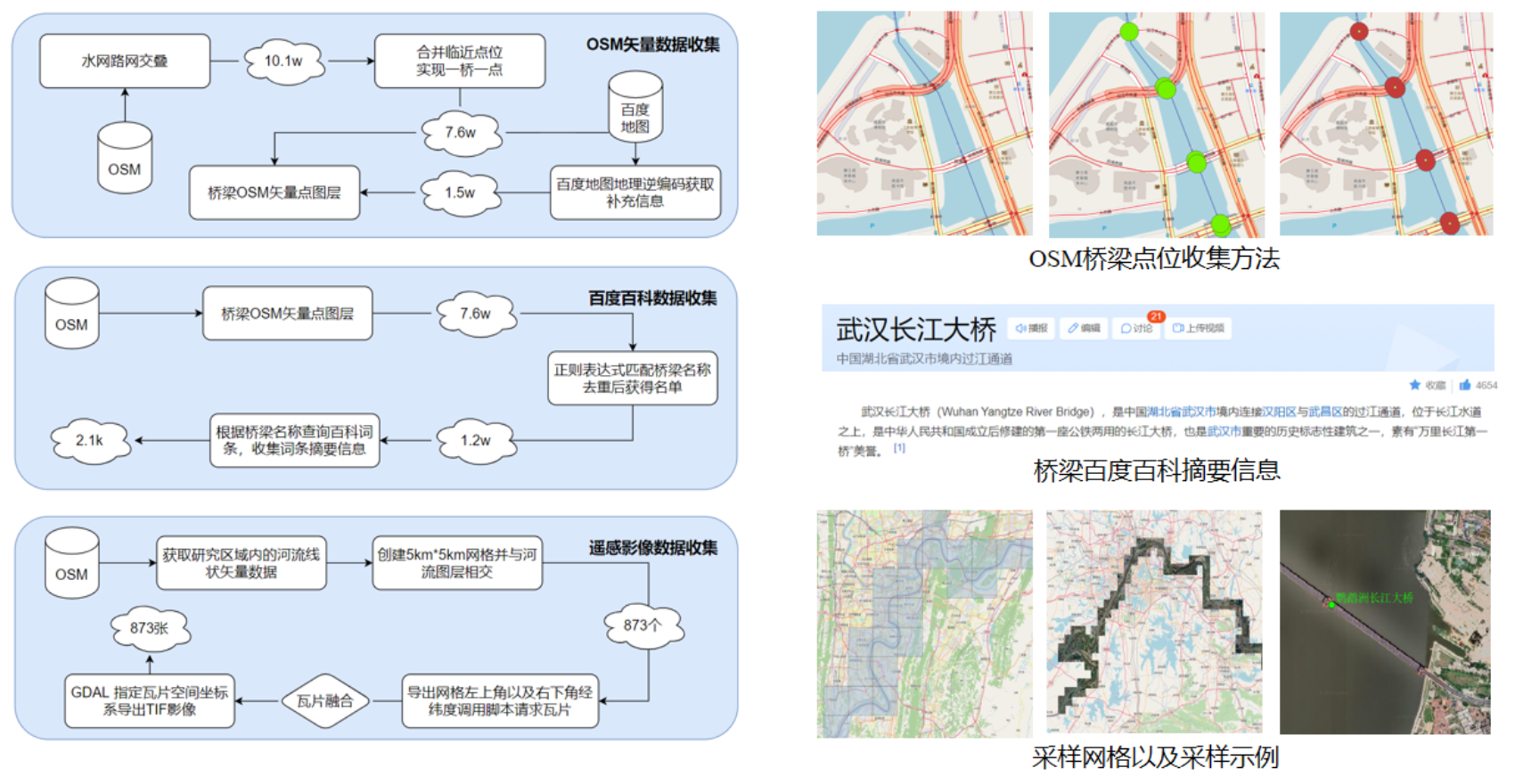
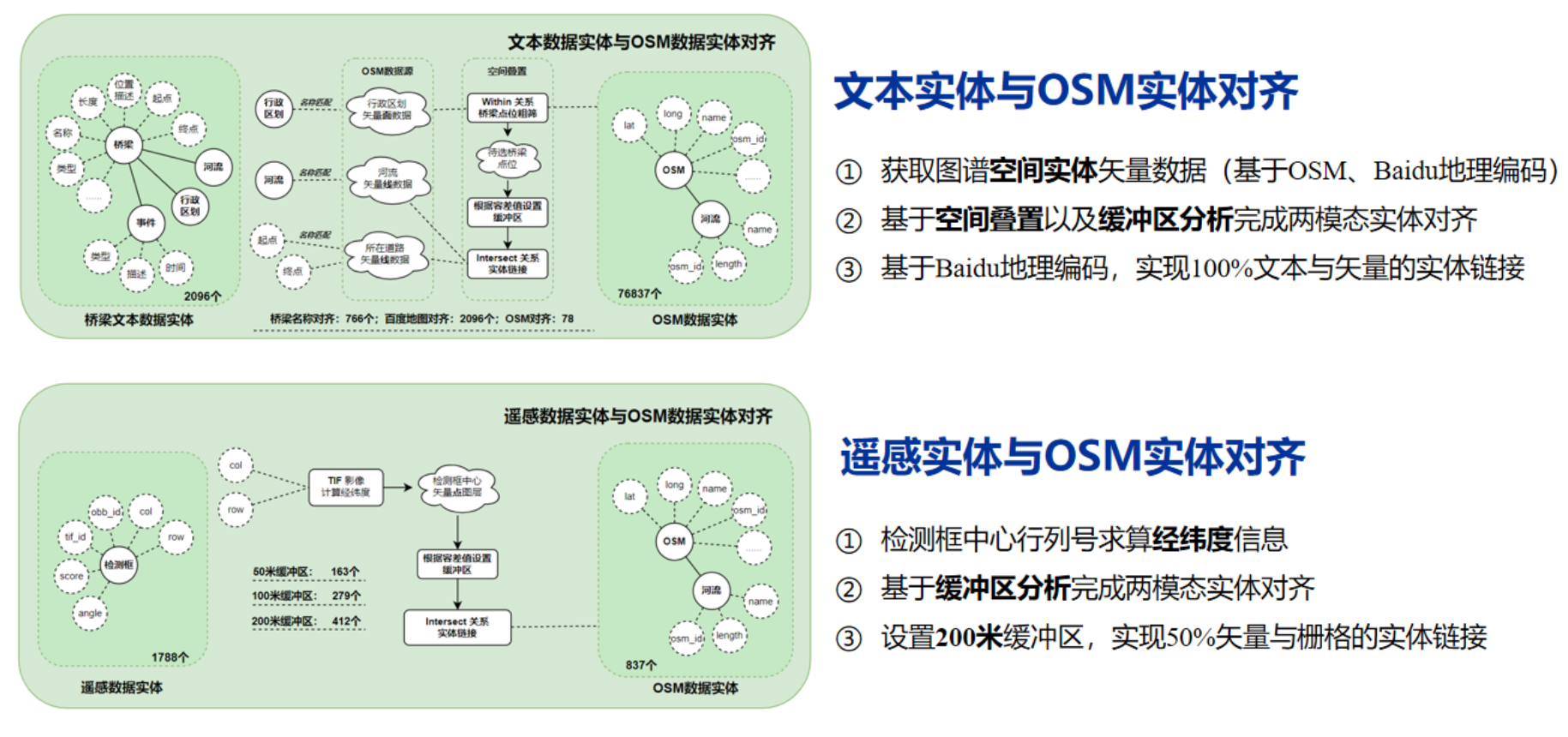
3. Implemented multimodal knowledge fusion by performing spatial overlay and buffer analysis to link text data, remote sensing imagery, and OSM vector data across modalities.
Intelligent Evaluation and AR-Based Presentation of Rural Cultural Tourism Attractions
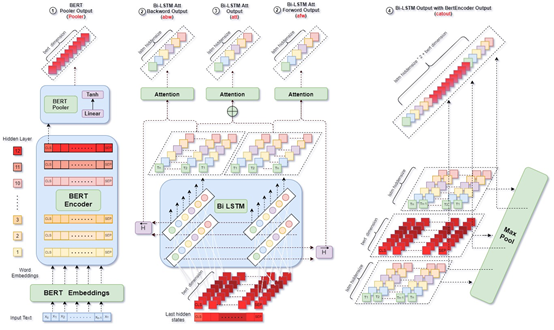
1. Developed a sentiment analysis model for scenic spot reviews using Chinese BERT; applied transfer learning with customized architecture and hyperparameter tuning; reduced overfitting in fine-tuning, boosting sentiment classification accuracy by 5% over the BERT-Base baseline.
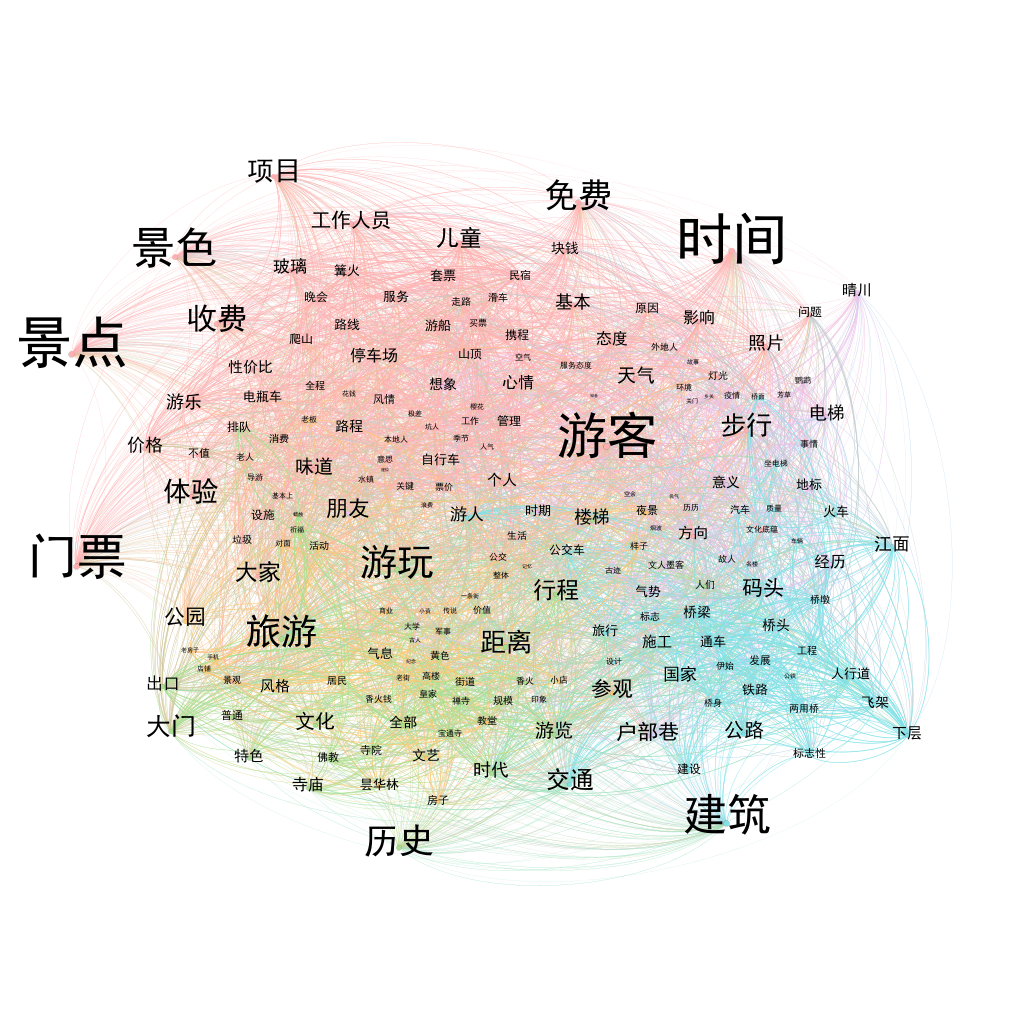
2. Analyzed short-text review corpora using the Biterm Topic Model (BTM); identified key issues in rural tourism experiences through topic clustering and extracted actionable insights for attraction improvement.
3. Built the backend for an Augmented Reality (AR) tourism service using Java Servlet; implemented logical layers for HTTP data requests, supporting real-time interactive content delivery for AR-enhanced scenic displays.
Web GIS Information Service Platform
1. Designed and developed a full-stack Web GIS platform independently using a three-tier B/S architecture; implemented spatial data query, editing, and storage functionalities for interactive geographic information services.
2. Built a constrained path planning service leveraging PostgreSQL and pgRouting; optimized routing algorithms to support multi-condition navigation and efficient spatial computation.
3. Developed a 3D visualization demo of the Taohuayuan Scenic Area using CesiumJS; integrated terrain, building, and route data for immersive virtual geographic exploration.
The 11th China Software Cup College Student Software Design Competition (National Second Prize / Top 3)
Team Lead · May 2022 – Aug 2022
1. Developed a lightweight face recognition system based on the embedded domestic OS SylixOS; led high-level software architecture and task decomposition.
2. Trained lightweight face detection, facial landmark, and feature-vector models in PyTorch and completed framework conversion.
3. Implemented model inference with NCNN and integrated core dependencies into SylixOS; achieved over 90% face recognition accuracy in official evaluation.